
迅雷
河北启动“人工智能+制造”典型案例征集_我的网站

A | 以标杆引领推动制造业企业数智化转型我省启动“人工智能+制造”典型案例征集日报讯(记者米彦泽)8月18日至25日,省开展“人工智能+制造”典型案例征集工作,将遴选一批技术先进、成效显著、可复制推广的制造业领域人工智能应用典型案例,通过标杆引领,推动制造业企业数智化转型。省工信厅相关负责人介绍,本次案例征集主要面向人工智能+钢铁、人工智能+化工、人工智能+生物医药等10个方向。
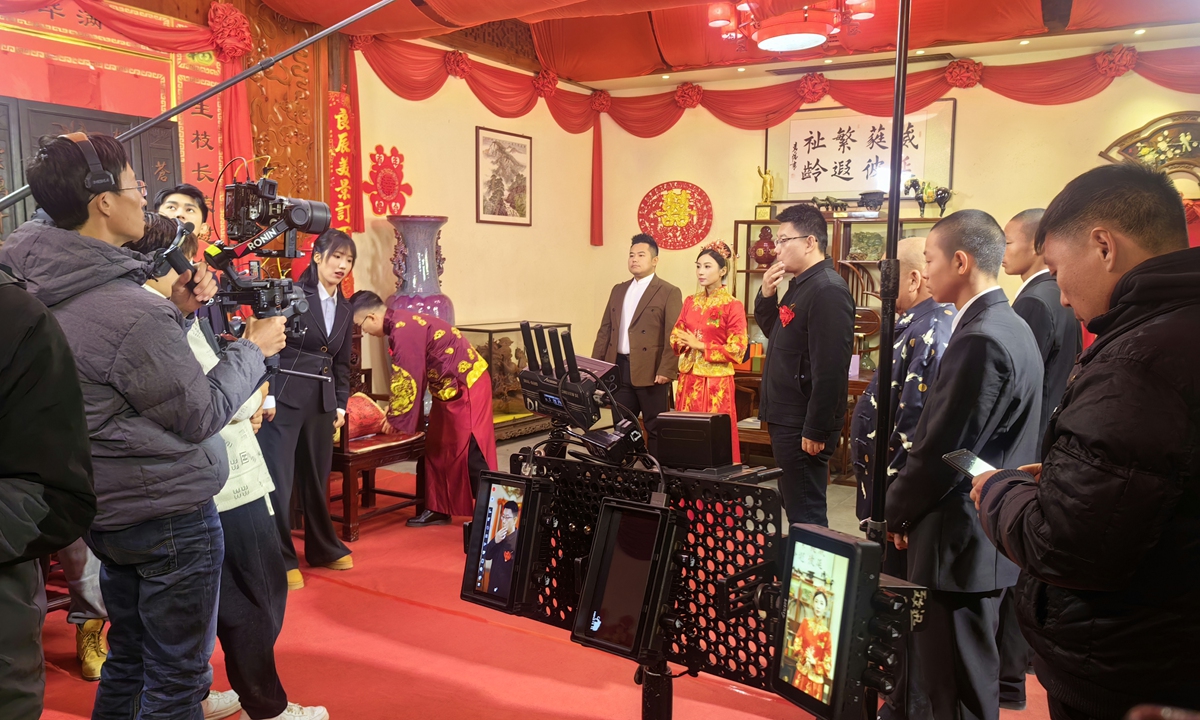
Yang Ni, a villager from Yuanqiao in Dengfeng, Central China's Henan Province, still remembers the nervous excitement of facing a slowly advancing camera for the first time. Now, she shifts with ease between roles, from a maidservant trailing a heroine in a historical drama to a famine-struck villager before the People's Republic of China was set up in 1949.
Experiencing so many lives within various screenplays, Yang said that short dramas have transformed not only her life, but also the ancient village she calls home.
Yuanqiao, a small village with a history that traces back over 600 years, has welcomed more than 70 short drama crews in recent years. The creators have captured every angle of the village's traditional courtyards, winding alleys, and gently rising cooking smoke. Locals have grown used to exchanging their daily farm clothes for costumes between busy seasons, giving life to lively townsfolk on vertical screens.
Yuanqiao village's revitalization is not just a story told through the camera lens. Si Jianbin, responsible for short drama coordination in the village, told the Global Times that the changes brought by short drama filming are visible in many ways.
With traditional buildings serving as natural film sets, once-abandoned houses, crumbling village walls, and old opera stages have been repaired and preserved. This has renewed villagers' sense of cultural stewardship. The arrival of drama crews has also broadened job opportunities for local youth; more young people are now choosing to stay or return home, breathing new life into the village.
Si noted that challenges also persist. The swift rise of AI-generated dramas is reducing demand for real-life shoots, and the number of visiting productions in the village has started to drop. Still, Si remains confident, noting that the village's authentic architecture meets the growing demand for high-quality short dramas. He said that leveraging this unique match will secure a promising future for revitalizing rural areas through film.
Changed villages
"For years, I only saw our old houses as broken-down obstacles; after filming, I realized every brick and tile is our cultural heritage," Yang said. Having played a background actor in numerous dramas - from period pieces to modern stories - she and her neighbors now see their ancient city walls, opera stages, temples, and homes through new eyes.
Some once-vacant houses have found new purpose as meticulously arranged sets, bearing witness to love stories or family feasts. One courtyard, frequently appearing in short dramas, is adorned with red lanterns and paper cuttings to express joy. Villagers redecorate it for shoots, blending cheerful ambiance with authentic period feel.
Today, Yuanqiao's residents - all from toddlers to seniors, even family donkeys and dogs - have become "stars" on camera. People farm during the busy season, then slip into costumes to perform, seamlessly shifting between fields and film sets.
Younger villagers have found new skills and work too. Si noted that more than half of local youth have acted as extras, with some job-seeking college graduates now learning editing and computer skills from the drama teams, opening the door to steady work in short film production.
The economic benefits for the village are clear. Si pointed out that village income grew from 4 million yuan ($593,330) in 2024 to over 5 million in 2025, a 20 percent of increase thanks to short drama filming. Most villagers have seen their annual incomes rise by around 5,000 yuan as a result.
Traditional crafts once on the verge of disappearing - such as paper-cutting and basket-weaving - are also reviving. Villager An Qing'e, known for her hand-woven flower baskets, was discovered by a filming crew and soon found online customers for her props.
Tourists, too, are seeing the village in a new light, as site visiting becomes an immersive experience. They are no longer fleeting passersby, but participants in the living stories of the ancient village.
The sets created for filming repurpose historical spaces, allowing visitors to step into the joys and sorrows of different eras.
This phenomenon is not limited to Yuanqiao village. The unique needs of rural and historical short dramas perfectly match the spaces and cultural resources of China's villages. Other places, such as Hujiaxi in Yuanling county, Central China's Hunan Province, and Nanhu in Jinyun county, East China's Zhejiang Province, are attracting drama crews and experimenting with a rural revitalization approach combining short drama with agricultural and cultural tourism.
Seeking the irreplaceable
Still, the path for rural short dramas is being tested by the realities of the market.
The rise of AI-generated content is quickly diverting orders away from real-location shoots. Si said that after peaking at 35 crews in 2025, the number shrank to one or two per month in Yuanqiao village by 2026.
Even so, Si sees a hopeful future. While AI short dramas win on low-cost virtual settings, China continues to encourage the creation of well-crafted real-life dramas through supportive policies.
There is a lasting appeal in the atmosphere, sense of history, and human vitality that only real villages can provide - qualities virtual images cannot match. As audiences and studios increasingly seek authenticity and quality sets, villages like Yuanqiao have lasting room to grow.
Zhang Peng, a cultural researcher and associate professor at Nanjing Normal University, told the Global Times that the rise of AI-generated short dramas is reshaping the industry. However, this does not mean villages will lose out on the benefits brought by filming. On the contrary, when the bubble fades, truly valuable villages may be in even greater demand.
Their core competitiveness is not just cheaper venues, Zhang explained, but their unique local culture, authentic lifestyle, and the fusion of online and offline tourism experiences.
"To keep these benefits, villages should not compete with AI on cost and efficiency," Zhang noted. "Instead, they must redefine their own irreplaceability in the production chain."
Ding Daoshi, a veteran internet analyst, offers a word of caution: short dramas change fast, and their impact rarely lasts as long as movies or TV series. For villages, the key to sustainable development is leaning on their unique heritage and not just short dramas.
By finding their own irreplaceable assets and combining them with the energy of film, they can secure their future for the long haul.
。申报案例应聚焦应用场景实际需求和所解决的重点问题,已落地并取得成效,具有引领作用,充分体现人工智能技术与行业深度融合,推动降本、增效、提质、减排等实际价值。在人工智能+钢铁方向,省聚焦钢铁全流程智能化升级,征集高炉转炉智能冶炼与工艺参数自适应优化、钢材表面缺陷智能检测与质量溯源、核心设备预测性维护与健康管理等典型场景。在人工智能+化工方向,申报案例应聚焦化工行业提质增效与安全管控,如核心工艺流程自适应优化、安全生产智能监测预警、关键设备预测性维护与故障诊断、智慧园区一体化智能管控等典型场景。人工智能+生物医药方向,聚焦医药研发与生产全链条智能化,包括但不限于创新药物分子智能筛选与优化、药物合成路径智能规划、小分子创新药物研发、注射剂智能密封性检测等典型场景。在人工智能+食品方向,省聚焦粮油加工、乳制品、酿酒等食品行业质量安全与高效生产,征集食品生产智能监控与全链条溯源、原料供应智慧管理、生产工艺参数智能调优、精准配料动态调控、多模态安全生产智能监测等典型场景。人工智能+新能源和智能网联汽车方向,申报主体可聚焦汽车全链条智能化升级,申报车身造型与结构智能设计仿真、柔性产线智能重构与生产调度、零部件与整车质量智能检测、智能座舱与智能驾驶辅助技术应用等典型场景。

B | 在人工智能+电子信息方向,省聚焦电子信息产业高端化智能化发展,征集电子元器件虚拟仿真与智能设计、显示面板/半导体缺陷智能检测、生产工艺参数智能优化、产品良率智能预测与提升、封装测试智能化管控等典型场景。人工智能+轻工纺织方向,申报主体可申报消费热点智能研判响应、面料纹样智能设计、3D虚拟试衣仿真、柔性产线智能排产、多产线协同排产与仓储智能调度等典型场景。在人工智能+机器人方向,申报案例应聚焦机器人技术与制造场景深度融合,包括但不限于大模型赋能机器人环境感知与任务规划、工业焊接机器人智能作业、柔性装配机器人精准操作、特种巡检机器人场景应用、具身智能机器人工业场景落地等典型场景。

C | 人工智能+产业集群方向,产业大脑建设与服务升级、“产业大脑+共享工厂”融合应用、行业大模型与数据集落地集群、“共享智造”关键环节与核心生产工艺AI应用等典型场景均可申报。

D | 在其他行业领域,省主要征集人工智能在建材、机械装备、软件和信息技术服务、民爆及安全应急等行业的创新应用,如建材窑炉煅烧智能控制、机械装备智能设计仿真、工业软件智能开发运维、民爆产品智能生产与仓储、重大安全风险智能监测预警等典型场景。
Current article:http://ho567md.cuntoujuefourantapai.cfd/5vsa3n/20260826/9789.html
Published on:08:00:30